




.tmb-250x190.jpg?sfvrsn=607438b5_1)


Ruukki Construction reduced its greenhouse gas emissions further from its own operations in 2025, strengthening its ability to deliver lower-carbon building products and solutions for customers. Operational emissions decreased by about 3% year over year, even as the reporting scope expanded. Compared to the 2019 baseline, emissions have now been reduced by 76%.
This progress is driven by structural changes in energy use, including a shift toward fossil-free electricity, reduced reliance on fossil fuels, and continuous improvements in energy efficiency and electrification.
“We are systematically reducing emissions across the value chain through our Ruukki® LowCarbon offering and continuous improvements in our own operations. At the same time, we help our customers meet their climate targets with lower-emission building solutions,” says Sami Eronen, CEO of Ruukki Construction.
Helping customers meet their climate targets
Reducing emissions in Ruukki’s own operations and value chain is an important part of lowering the overall climate impact of buildings.
Ruukki’s climate targets are aligned with the Science Based Targets initiative (SBTi):
- –85% emissions from own operations (Scope 1 & 2) by 2035
- –40% emissions in selected value-chain categories (Scope 3) by 2035
- Net-zero emissions across all scopes by 2045
At the same time, the Ruukki LowCarbon offering continues to expand, helping customers reduce lifecycle emissions in their projects through lower-emission steel-based building products.
Clear results in production
In 2025, Ruukki continued to reduce emissions across its production by focusing on four key areas: electricity, energy efficiency, heating, and internal logistics.
We increased the use of fossil-free electricity and expanded the use of on-site renewable energy solutions. For example, the Landsbro plant in Sweden switched to fossil-free electricity, bringing the share of fossil-free electricity used across Ruukki to 96%. At the same time, on-site solar power projects advanced in Poland and Estonia, in Oborniki, Żyrardów, and Pärnu.
Energy-efficiency efforts also continued in production processes and building systems such as heating, ventilation, and air conditioning. In Kauhava, Finland, for example, we explored ways to improve the energy efficiency of the roof safety product painting line by using lower-temperature coating solutions, reducing the need for fossil fuels.
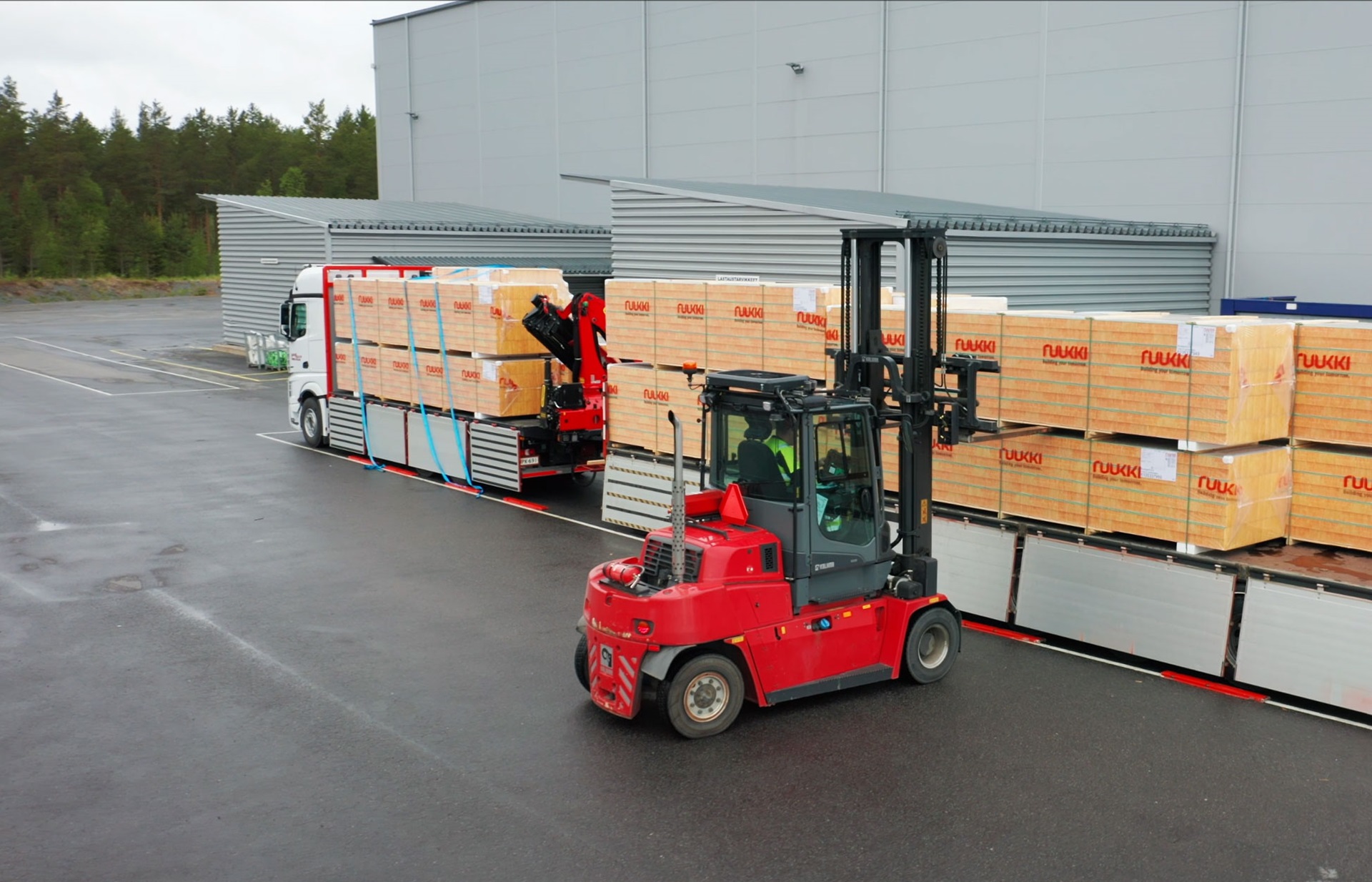
We also continued to assess alternatives to fossil-based heating and to electrify internal logistics by replacing fossil-fuel-powered equipment with electric alternatives.
Together, these actions reduce the carbon footprint of our operations and support the development of lower-emission products for our customers.
Progress also in the value chain
In 2025, Ruukki expanded its climate roadmap to cover the entire value chain (Scope 3).
The Scope 3 emissions in the categories included in our target setting — raw materials, transport, waste, and leased facilities — decreased by 34% compared to 2019 and 6% compared to 2024.
This reduction reflects both differences in production volumes compared to the 2019 baseline and improvements in raw-material emission intensity, including improvements in the carbon footprint of mineral wool.